ICAS - ADOLESCENT SEXUAL AND REPRODUCTIVE HEALTH
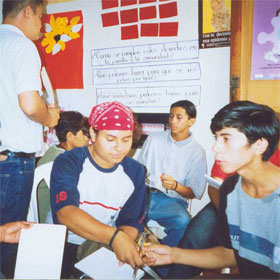
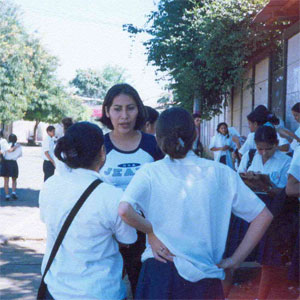
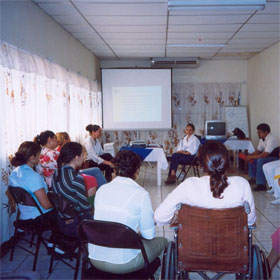
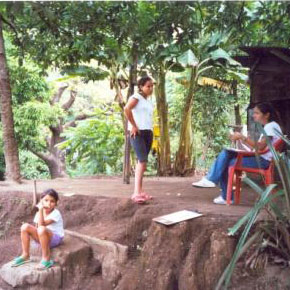
Protecting the sexual and reproductive health of today's youth in Nicaragua and other developing countries is an urgent priority. Nicaraguan youth encounter many challenges in this area as they initiate sexual activity, form unions and start families. Young people in Nicaragua are a major group at risk of HIV, sexualyl transmitted infections (STIs), and early and unwanted pregnancies. Furthermore, young people face issues of gender inequity, lack of access to appropriate information and lack of access to appropriate health services.
Some facts:
-
Nicaragua has the highest adolescent fertility rate in Latin America with 106 births for every 1,000 women aged 15-19 in 2007.
-
A quarter of all births in Nicaragua - 35,000 per year - are to 15 to19-year-olds.
-
Almost half of young women (48%) in Nicaragua had their first child before their 20th birthday.
-
The rate of unplanned adolescent births is increasing (from 34 per 1,000 15-19 year olds in 1998 to 54 per 1,000 in 2001).
-
Use of family planning among sexually active young women (15-19 years) is only 61%.
-
The level of unmet need for modern family planning is high: 31% of sexually active young women (15-24 years) and even higher for single young women: 52%.
-
The HIV epidemic is increasingly a problem for young women (as well as for young men) and is predominantly transmitted via heterosexual sex. Young people are at risk, but reported condom use at last sex is low: 11% among young single women (15-24 years) and 45% among young single men of the same age.
-
Young people are at risk of STIs, but have insufficient information available, and are reluctant to access health services when presented with symptoms of an STI.
From 2000 to October 2005 ICAS developed a programme in the municipalities of Managua, Ciudad Sandino, Tipitapa, Rivas, Sapoa, Cardenas, Chinandega, Corinto, Matagalpa and Leon, aimed at adolescents and young people aged 12 to 24 years with low levels of schooling and low socioeconomic status, providing them with access to sexual and reproductive health services. The purpose was to improve the technical and social quality of health care providers. The programme increased access to family planning, treatment of sexually transmitted infections (STIs ) and provided information and education on issues related to sexual and reproductive health.
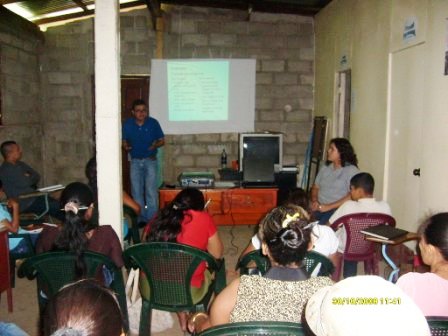
In 2007, ICAS developed the component of prevention of STI/HIV/AIDS at community level in rural areas. This took place in 11 municipalities in Matagalpa, Nicaragua. The activities were developed under the project FAMISALUD funded by US-AID, through the NGO network NICASALUD. One of the first activities was to make a diagnosis with 227 teachers in 40 schools in 9 municipalities, which leveraged the knowledge and attitudes of teachers in the intervention municipalities. ICAS trained at least 50 teachers with the aim of promoting safer sexual behaviour, preventing sexually transmitted infections (STIs) and HIV / AIDS and contributing to the improvement ofthe social environment of adolescents and youth in the intervention areas.
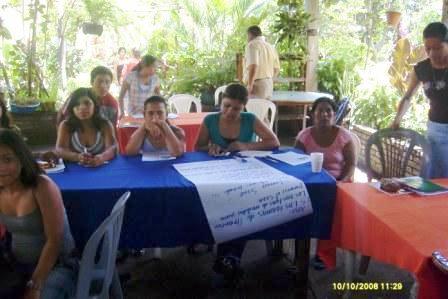
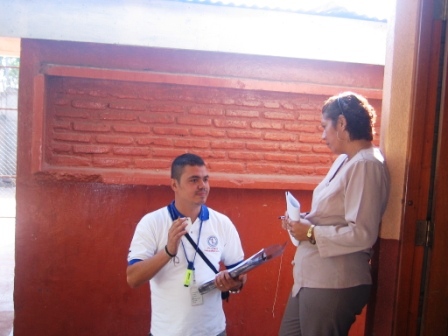
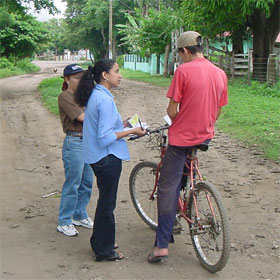
During the months August to December 2008, ICAS trained over 200 community promoters (teachers, community leaders, religious leaders, volunteers, etc.) of 63 rural communities belonging to 9 municipalities in Matagalpa, as part of the project "Familias Unidas por su Salud - FAMISALUD". These promoters are an essential part of a communication strategy to prevent STIs and HIV in rural areas. Through this network of community promoters it is possible to reach the different target groups, including adolescents and young people , and to promote responsible behaviour related to sexuality and to promote sexual and reproductive rights.
Over 8 years, ICAS has been implementing two major effective strategies of proven effectiveness:
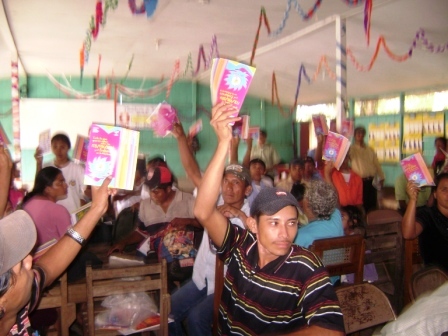
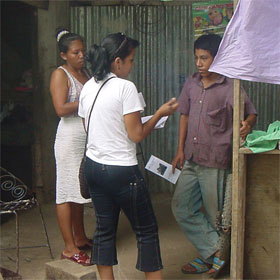
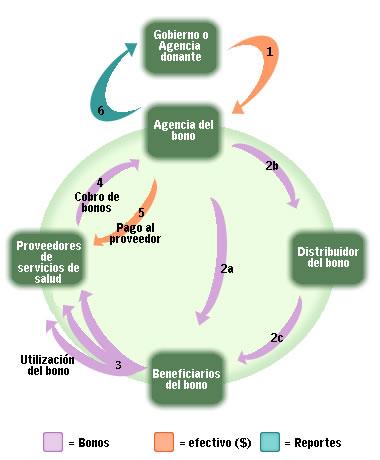
Competitive Vouchers: vouchers have been distributed at sites where adolescents and young people gather (neighbourhoods, sporting sites, parks, markets, adolescents clubs, schools), either by ICAS promoters or through the network of over 15 NGOs collaborating with the programme. The vouchers give adolescents the right to free medical consultation (a first and one follow-up consultation) in any of the more than 20 clinics contracted and trained by the programme.
Once in the clinics, adolescents received educational materials, condoms, counselling and, when necessary, a pregnancy test, pre-natal control, treatment for STIs and family planning, all provided free of charge by the programme.
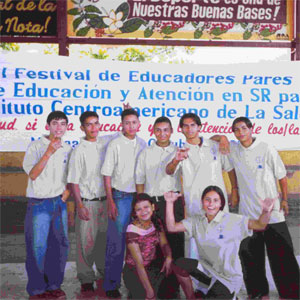
The second strategy included in the program in 2004, consists of various communication models to change behaviour including: peer education and information, entertainment and recreational activities, life skills, use of mass media, brochures and educational materials, promotional materials, community participation. Using this strategy, the most vulnerable neighbourhoods were reached, and information was provided on issues relating to the rights and care of their sexual and reproductive health.
The program has been funded by the Ministries of Foreign Affairs of the United Kingdom, the Netherlands and the United States (the latter was through the NGO network NicaSalud).
Competitive Vouchers Scheme.
ICAS identified the need to inlude the community (teachers, community leaders, local authorities, parents etc.) as active partners, to address the problems of adolescents and young people in relation to sexual health. The aim is to change and confront existing community norms related to sexuality and gender and improve the response to the needs of adolescents and young people. This is done through the promotion of civil engagement, with emphasis on critical thinking skills and skills which encourage social action.
The program described above, has proved highly successful in reaching the most vulnerable adolescents and depends almost entirely on funding from interested donors.
ICAS has drafted a new proposal to help improve sexual and reproductive health of adolescents and young people in Nicaragua and is currently raising funds to develop the project. The proposal combines the voucher scheme with an education and communication campaign and community mobilization and participation, with the active involvement of adolescents and young people, parents, teachers, health providers, community leaders and decision makers. The project proposal is available here
For more information, please contact Joel Medina López, coordinator of the Sexual and Reproductive Health Program for Adolescents and Young People.
Some publications in English on the Sexual and Reproductive Health Program are listed below::
-
Results of the I diagnose to Teachers of 40 schools of 7 municipality of Matagalapa, one of you RAAS and one of they RAAS her, on the knowledge in aspects related to the prevention of the ITS/VIH/SIDA, February - March 2007. For the Spanish version click here
-
Meuwissen LE, Gorter AC, Kester A and Knottnerus A. Uncovering and responding to needs for sexual and reproductive health care among poor urban female adolescents in Latin America. Tropical Medicine and International Health, Enero 2008
-
Meuwissen LE, Gorter AC, Kester ADM and Knottnereus A. Does a competitive voucher program for adolescents improve the quality of reproductive health care? A simulated patient study in Latin America. BMC Public Health 2006, 6:204 doi:10.1186/1471-2458-6-204. English version here.
-
Meuwissen LE, Gorter AC, Kester ADM and Knottnerus JA. Can a comprehensive voucher program prompt changes in doctors’ knowledge, attitudes, and practices related to sexual and reproductive health care for adolescents? A case study from Latin America. Tropical Medicine and International Health 2006;11(6):889–898. English version here, Spanish translation here.
-
Meuwissen LE, Gorter AC, Knottnerus A. Impact of accessible sexual and reproductive health care on poor and underserved adolescents in Managua, Nicaragua: A quasi-experimental intervention study. Journal of Adolescent Health, 2006;38(1):56. English version here Spanish translation here
-
Meuwissen LE, Gorter AC, Knottnerus A. Perceived quality of reproductive care for girls in a competitive voucher programme. A quasi-experimental intervention study, Managua, Nicaragua. International Journal for Quality in Health Care, 2006;18(1):35-42 (Epub 2006 Jan 18). English version here Spanish translation here.
-
Meuwissen LE, Donaire TE, Medina JA, Segura ZE and Gorter AC. Nicaragua: Introducing a voucher scheme for disadvantaged adolescents' access to services in three districts. Sexual Health Exchange, 2004, 3&4 English version here Spanish translation here
-
Meuwissen L, Barriers to accede reproductive health services successfully removed. Presentation at Youth and Health: Generation on the Edge, Global Health Council’s 31st Annual Conference, Washington, DC, USA, 1-4 June 2004.
-
Gorter A, Segura Z, González P and Meuwissen L, A voucher scheme for adolescents of Managua: an innovative programme to improve the uptake and quality of sexual health care, Seminar – Adolescent Sexual Health Care at the London School of Hygiene and Tropical Medicine, London, June 4, 2001.